Design is Everywhere. Be Visible.
These two statements are the foundation of my design work, and are what I chose to highlight in the creation of my two design manifesto posters.
RISO manifesto
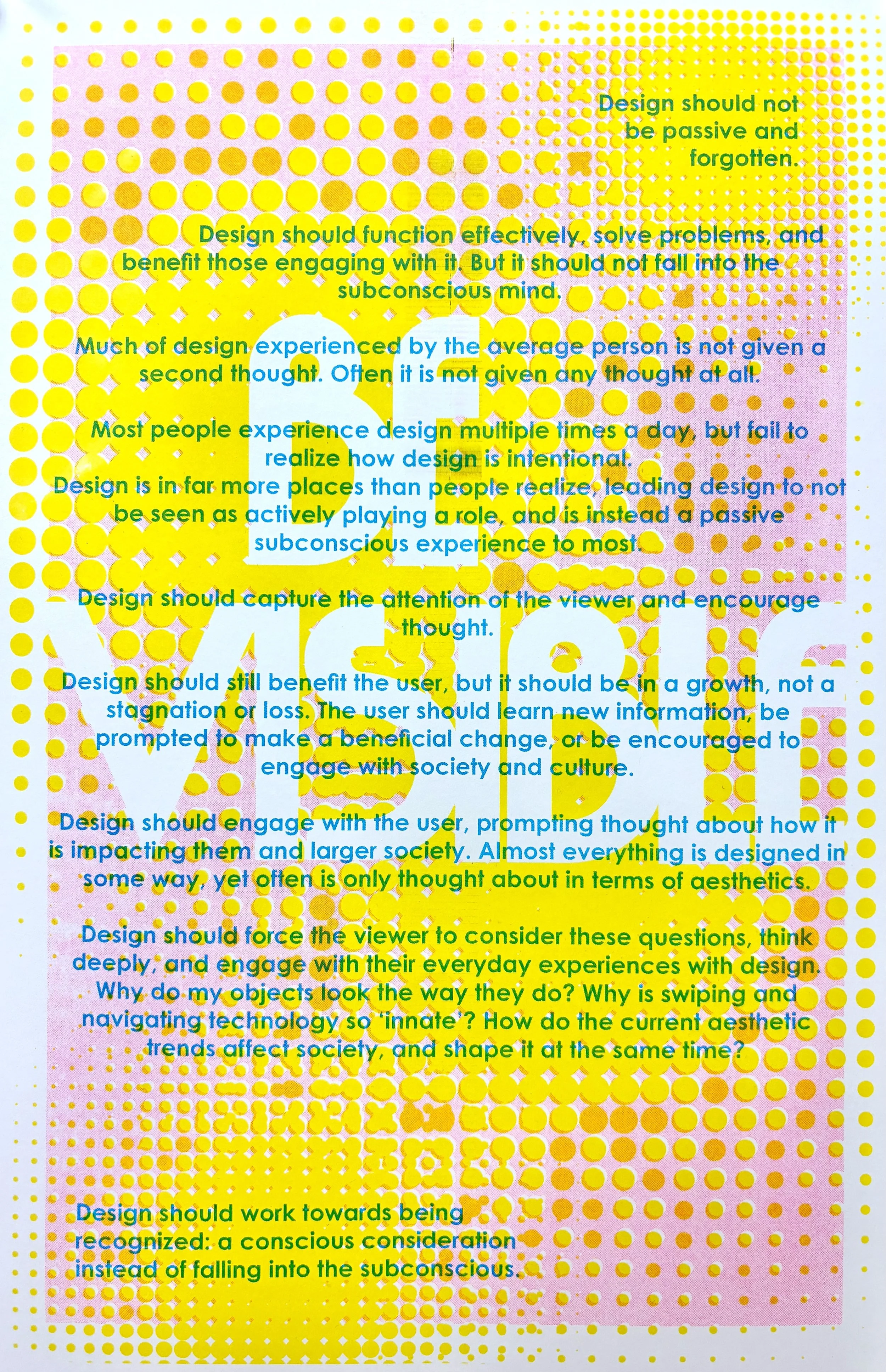
For this version of my manifesto, I sought to utilize the RISO printing process to create overlapping areas with the inks. When creating my digital files, I knew there would be some unpredictable moments with the RISO printer, creating new colors where the inks overlapped and imperfect areas due to the impossibility of perfect registration. These aspects of RISO printing played perfectly into the message I wish to convey in my manifesto, where everything is designed and should be recognized, considered, and appreciated.
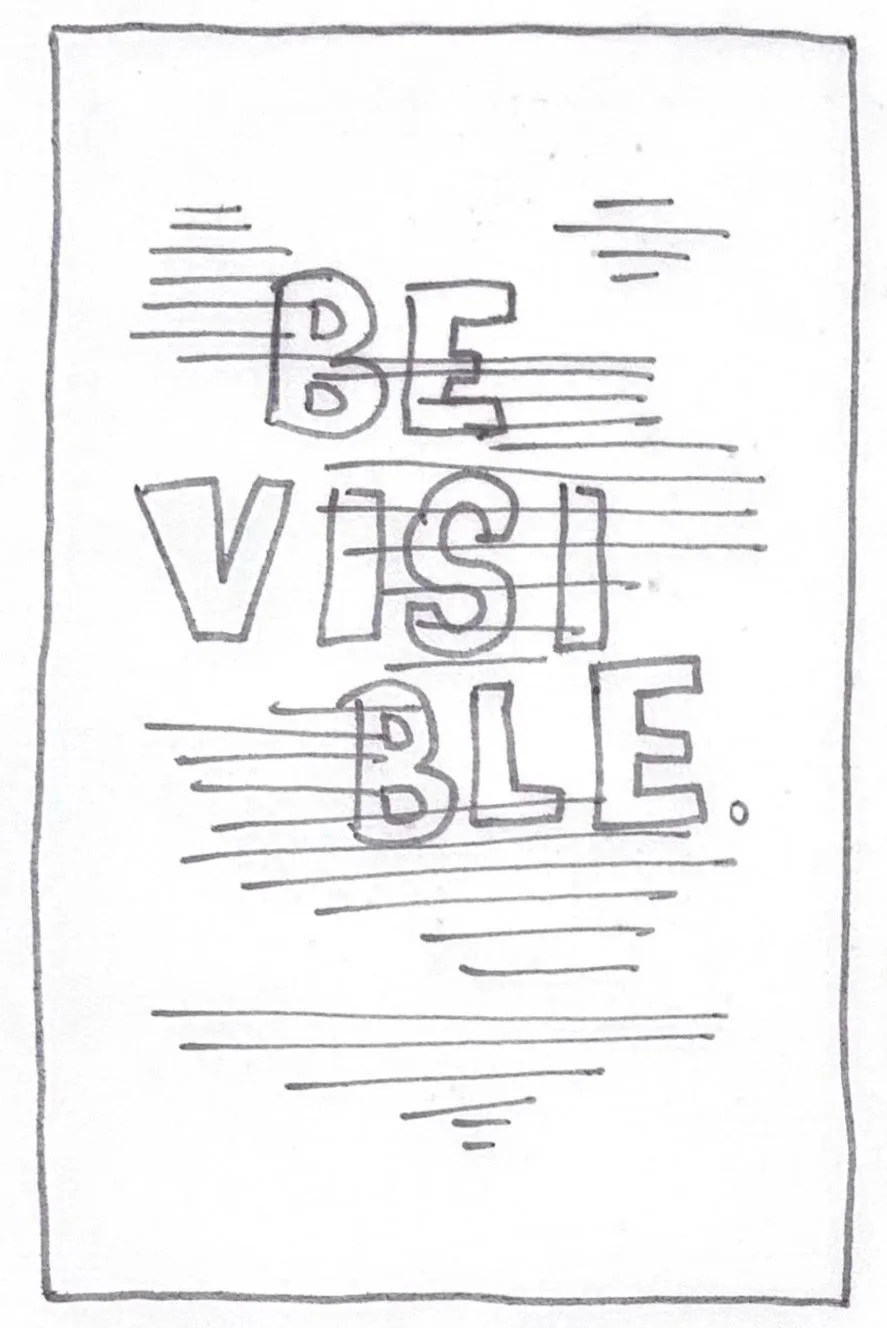
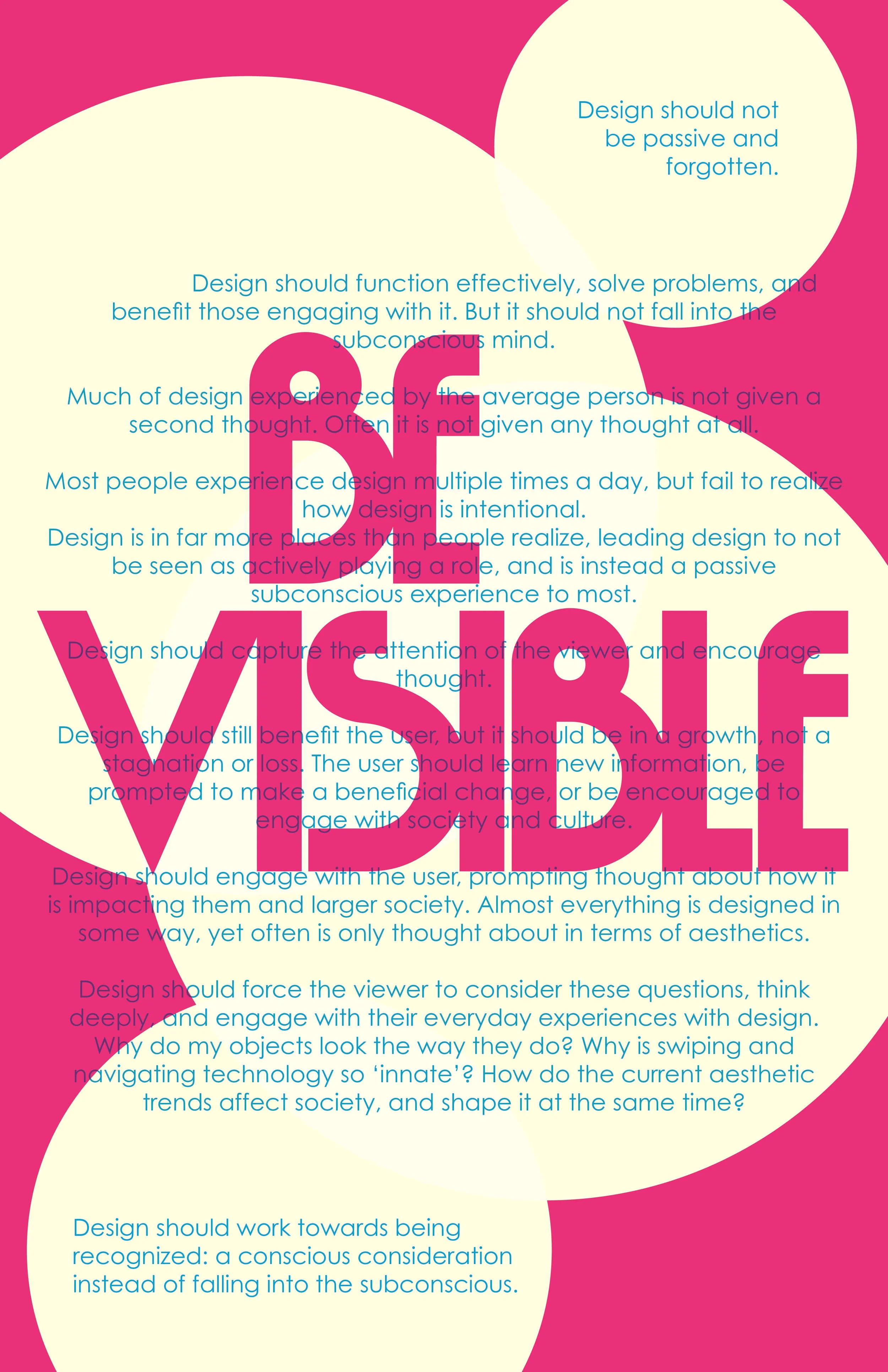
Original Sketch & First Digitization
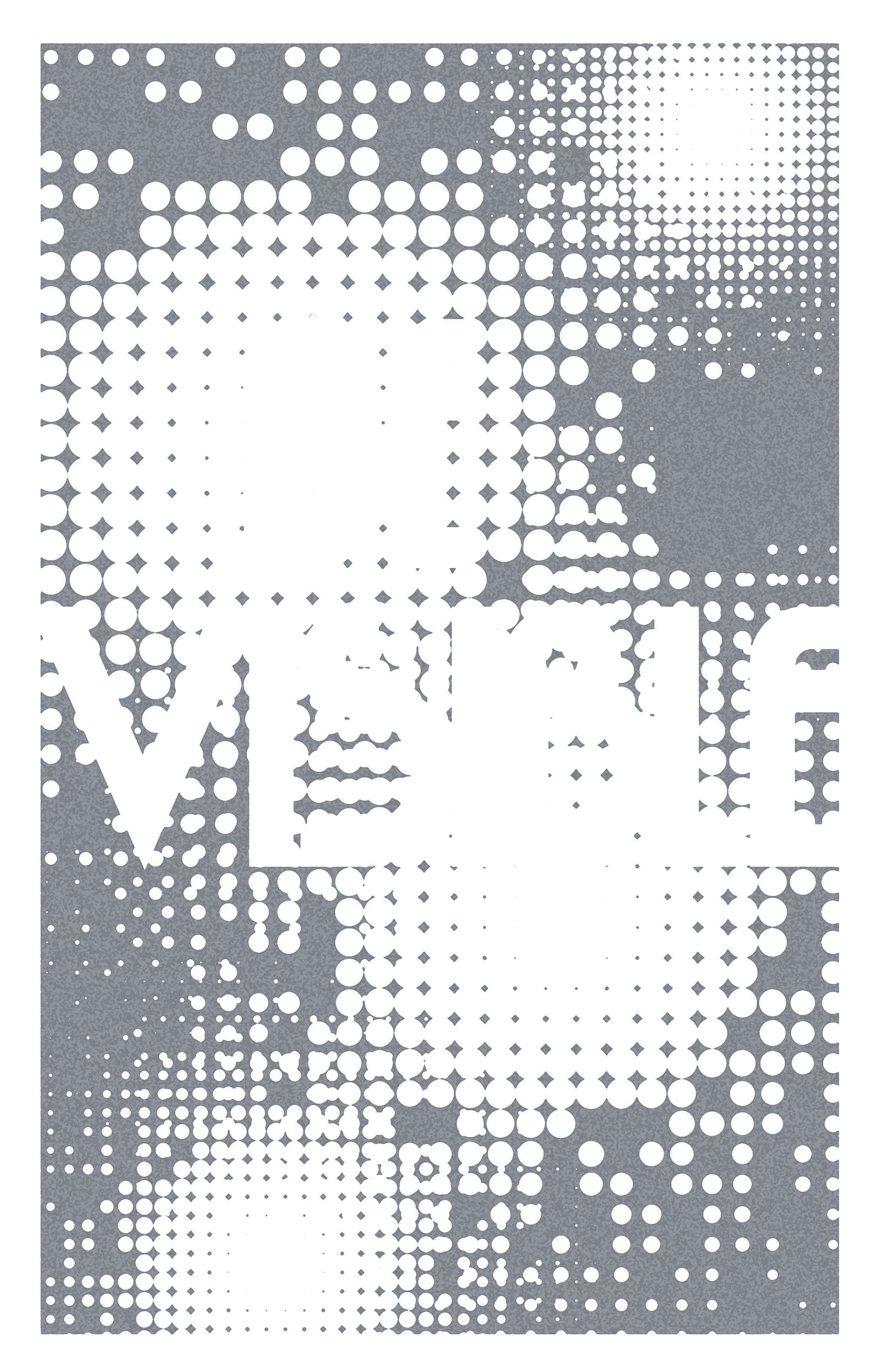
Fluorescent Pink
RISO Separations
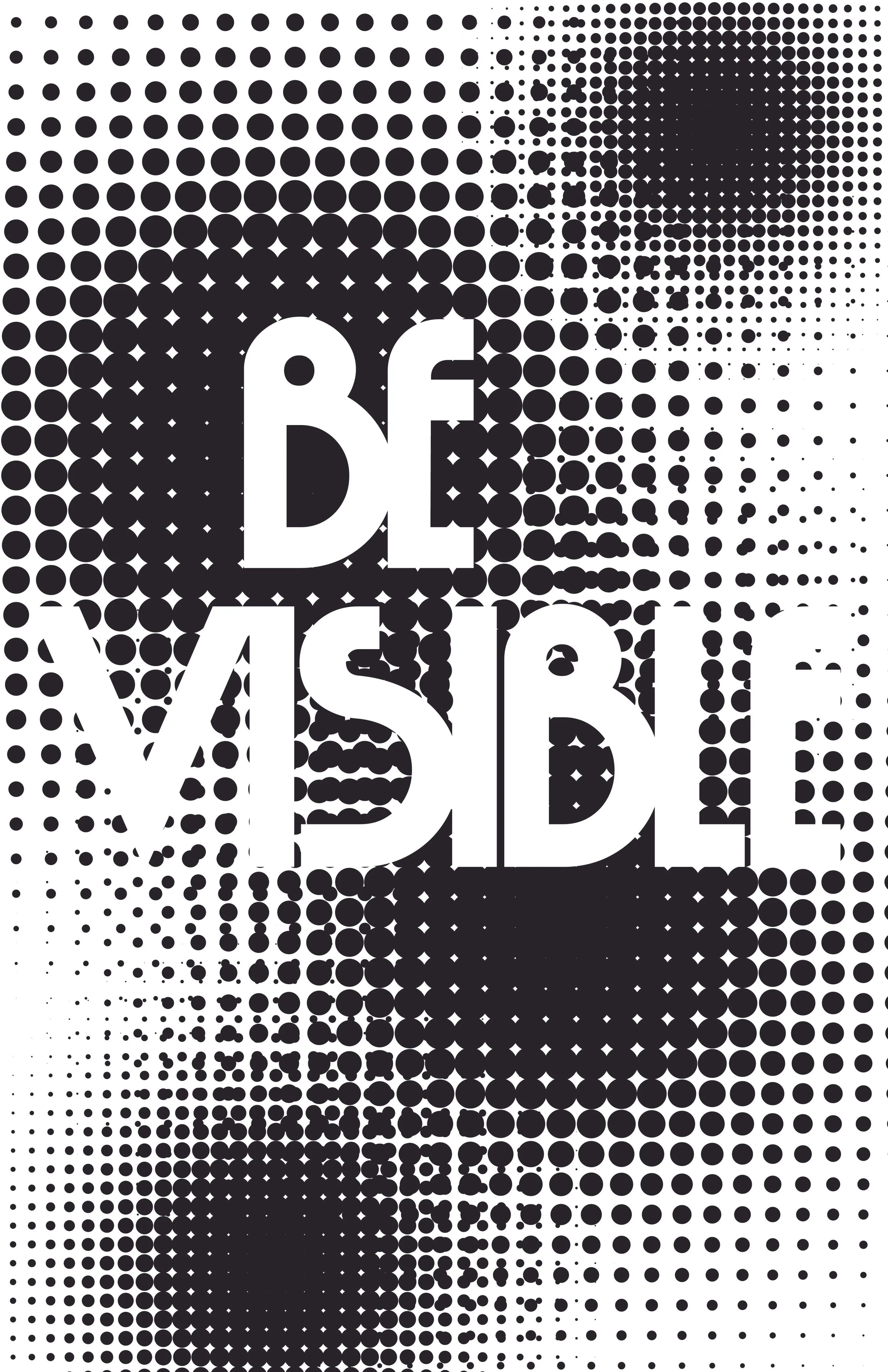
Yellow
Aqua
Inkjet Manifesto
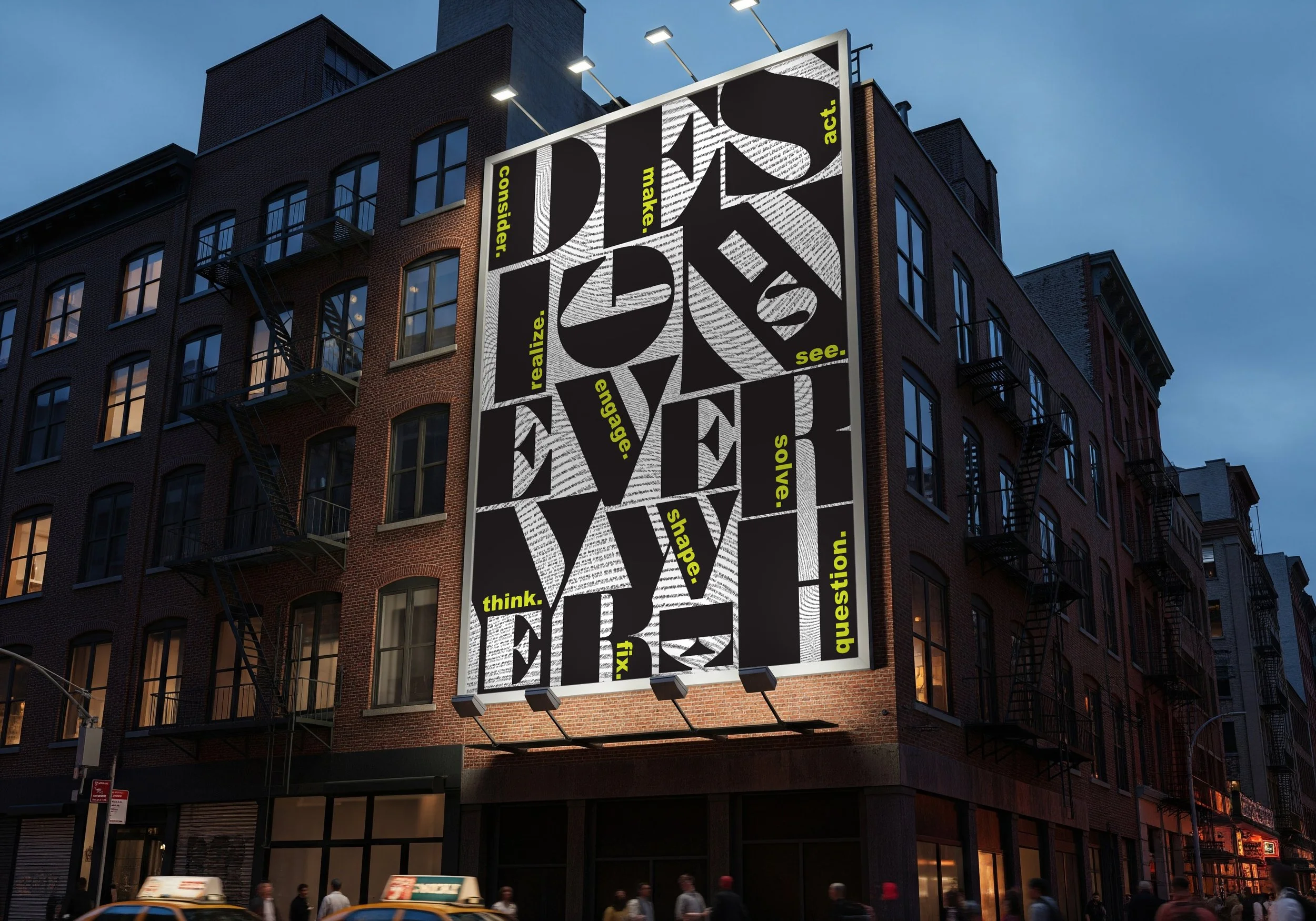
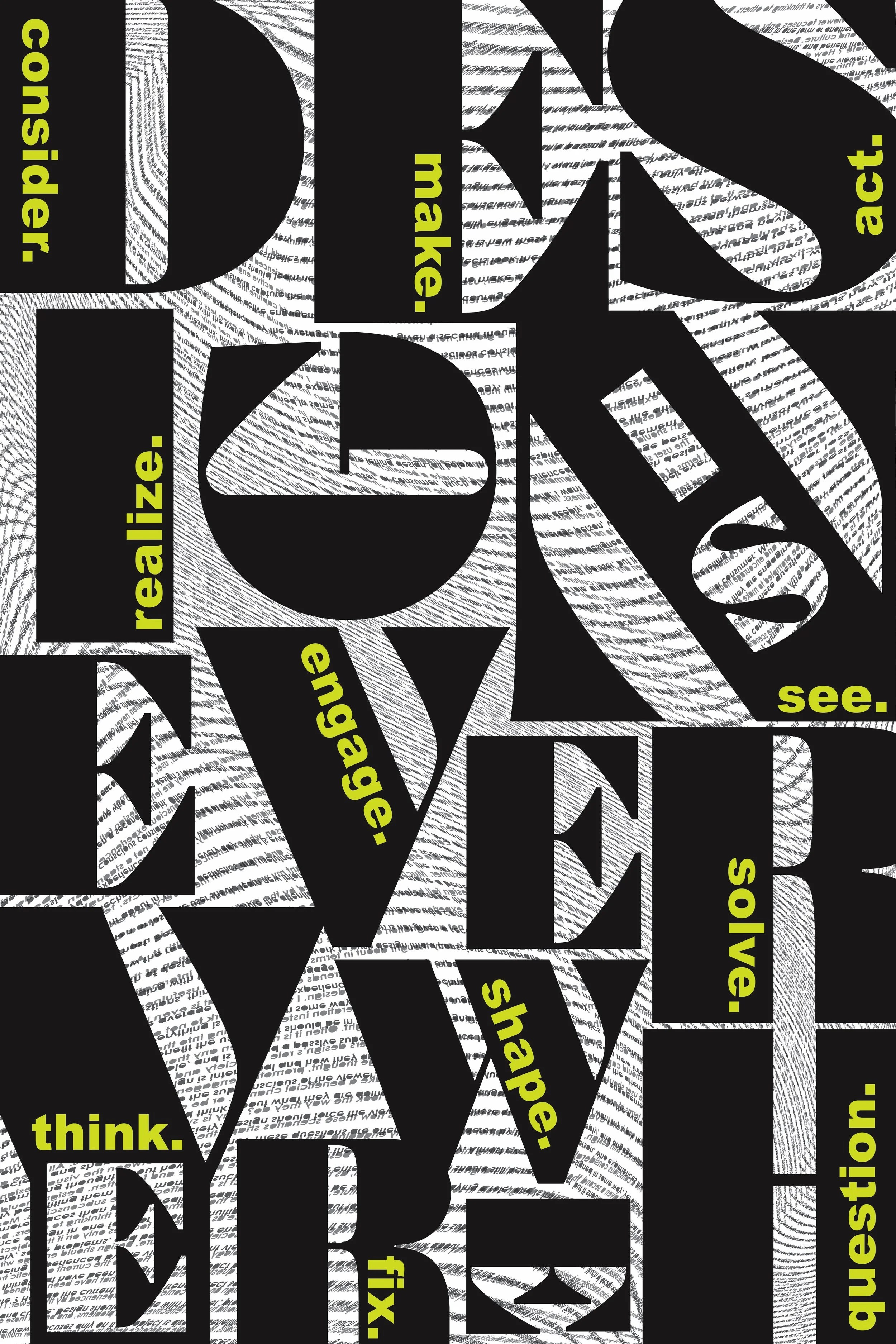
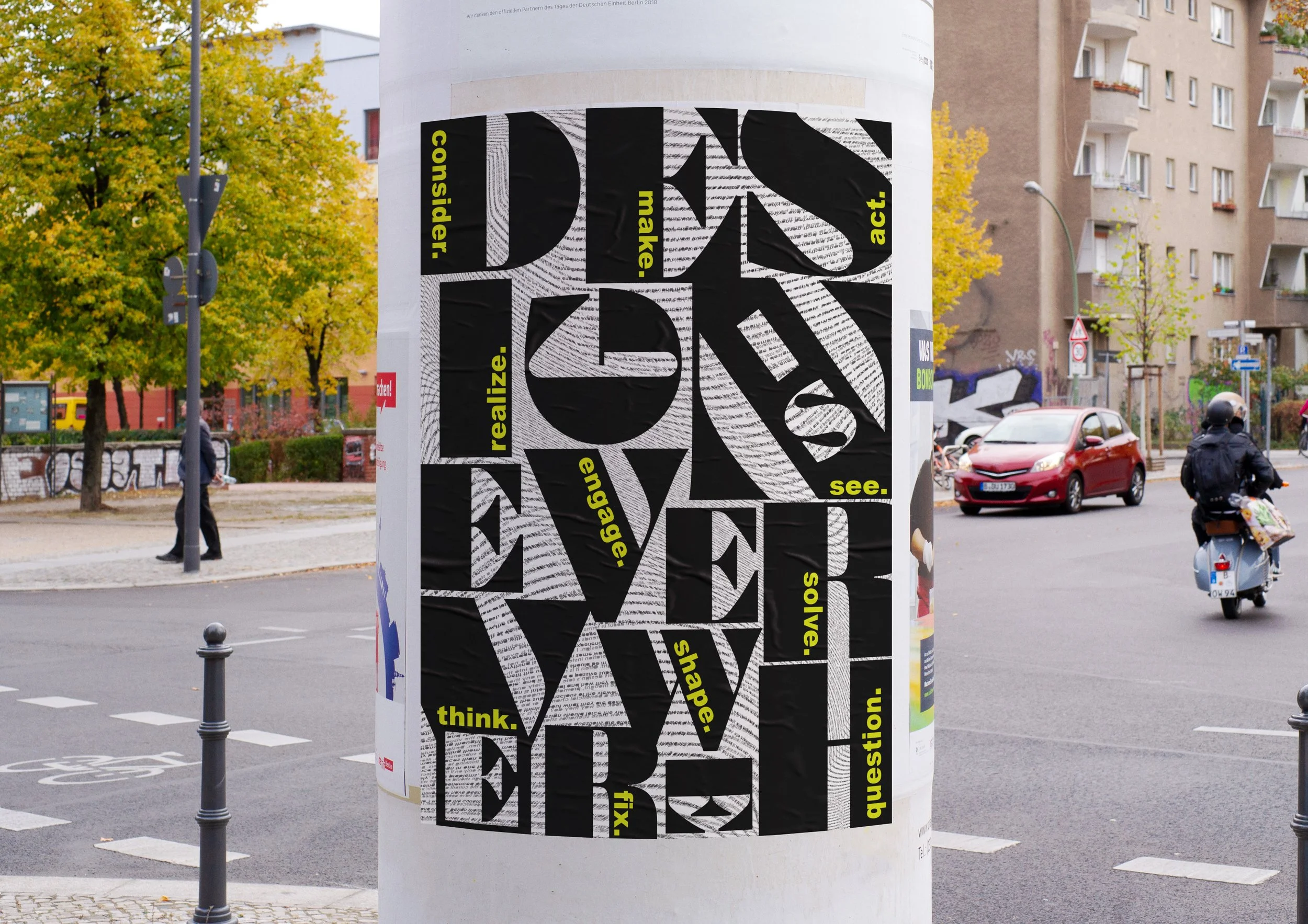
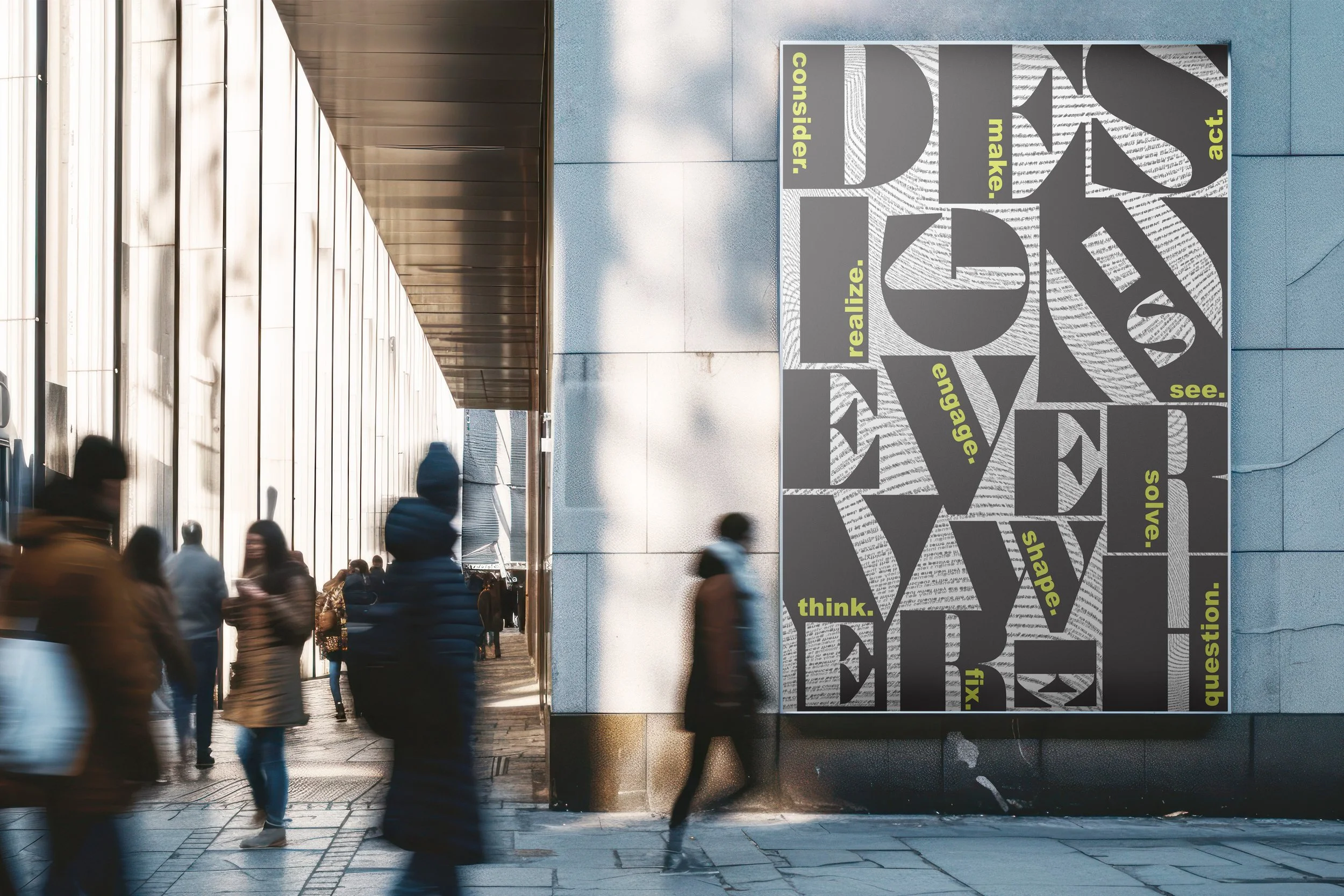
For the larger-scale inkjet manifesto poster, I wanted to utilize the scale and space to convey the message “design is everywhere,” along with key words from my manifesto. While the body text of my manifesto is not legible, the main points are stated clearly for the viewer. Act, consider, make, engage, see, think, solve, all actions that go into the creation of design but are no longer recognized once they leave and reach an audience without a mind for design.
This version of my manifesto is more direct about what I feel design should do and what all viewers should take the time to recognize. That design is everywhere, intentional, and not just aesthetic, but rather is a collection of conscious decisions that influence and impact each person that views it.
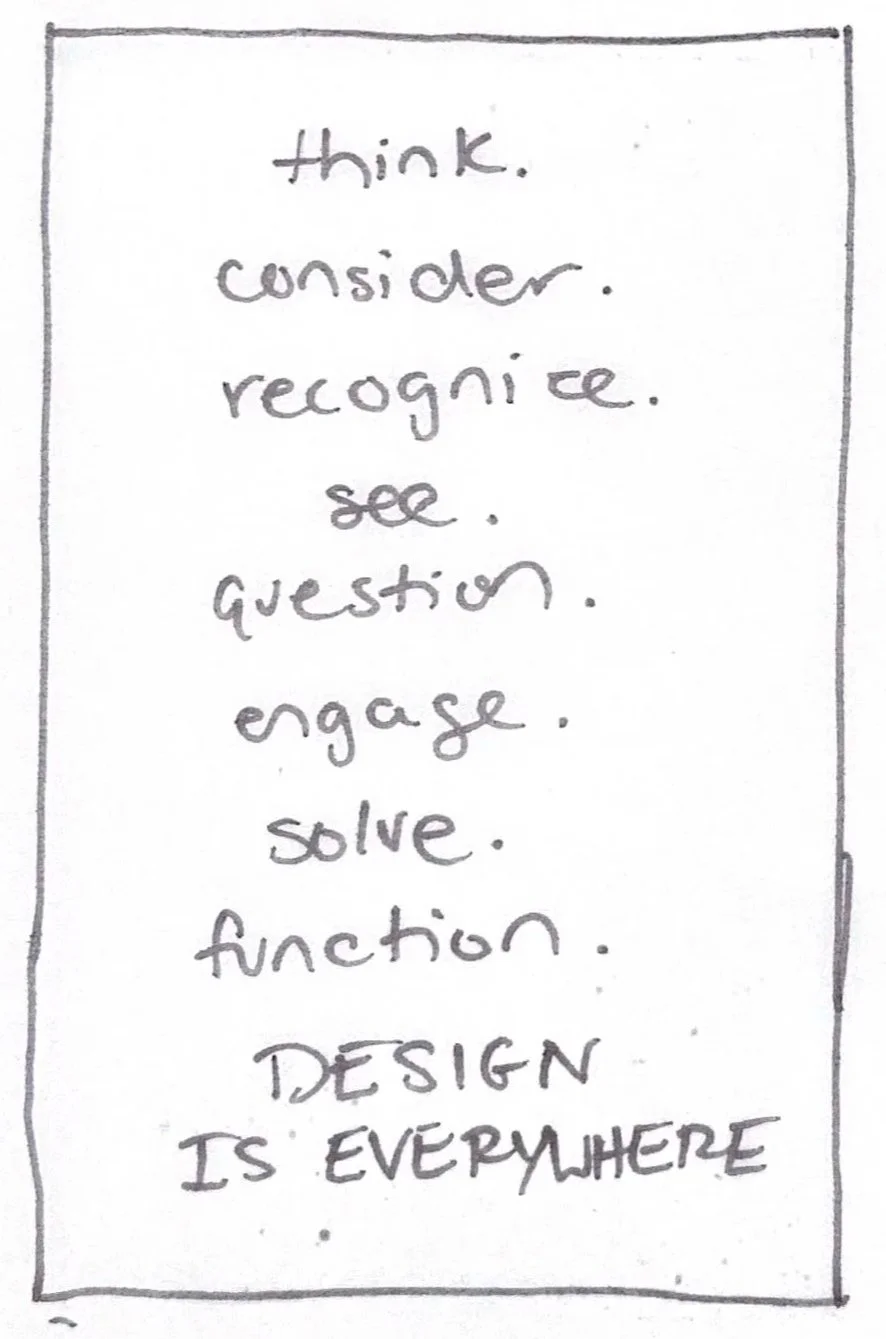
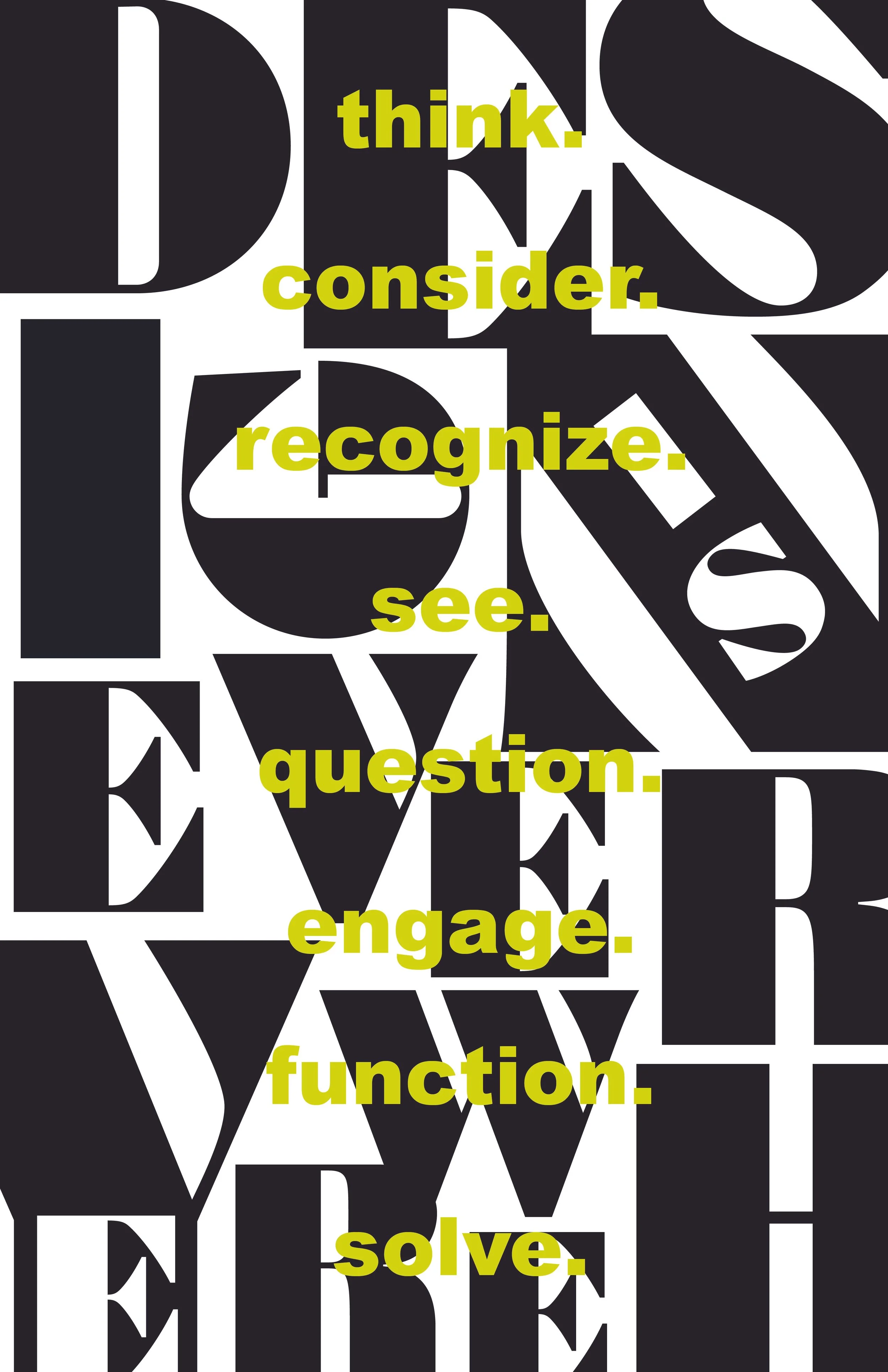
Original Sketch & First Digitization
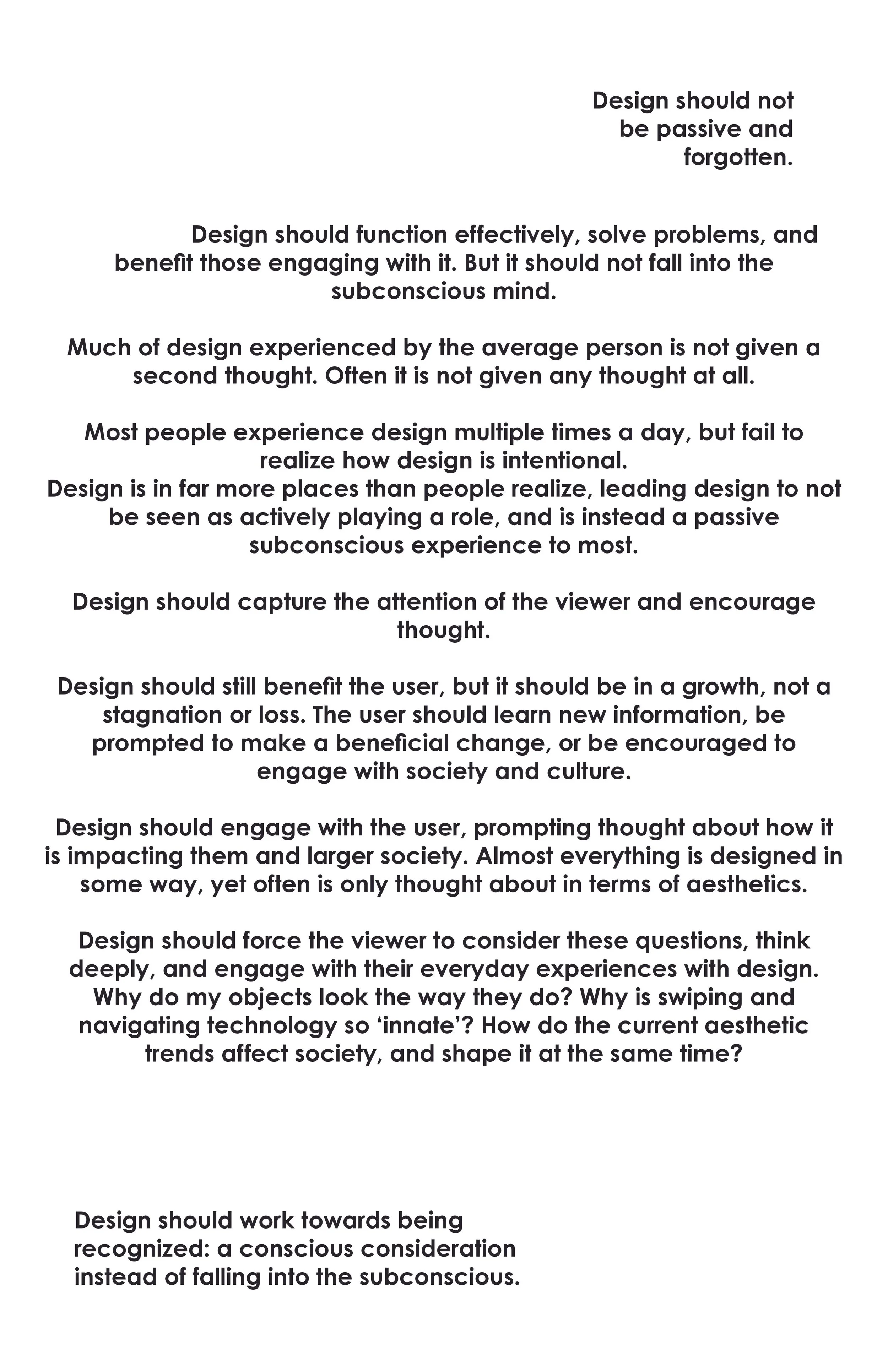
Design should not be passive and forgotten.
Design should function effectively, solve problems, and benefit those engaging with it. But it should not fall into the subconscious mind.
Much of design experienced by the average person is not given a second thought. Often it is not given any thought at all.
Most people experience design multiple times a day, but fail to realize how design is intentional.
Design is in far more places than people realize, leading design to not be seen as actively playing a role, and is instead a passive subconscious experience to most.
Design should capture the attention of the viewer and encourage thought.
Design should still benefit the user, but it should be in a growth, not a stagnation or loss. The user should learn new information, be prompted to make a beneficial change, or be encouraged to engage with society and culture.
Design should engage with the user, prompting thought about how it is impacting them and larger society. Almost everything is designed in some way, yet often is only thought about in terms of aesthetics.
Design should force the viewer to consider these questions, think deeply, and engage with their everyday experiences with design. Why do my objects look the way they do? Why is swiping and navigating technology so ‘innate’? How do the current aesthetic trends affect society, and shape it at the same time?
Design should work towards being recognized: a conscious consideration instead of falling into the subconscious.